
Before beginning, browse the rest of the Cemlist resources for buying, selling, and transfer guidance.
1. Confirm that the cemetery can process the transfer
The cemetery office is the only reliable source for its current requirements. Before advertising, ask it to confirm:
- Whether its records show you as the current holder of the burial right.
- Whether the right can be transferred and whether any use restrictions affect the transfer.
- Which documents, forms, signatures, identification, or approvals it requires.
- Whether a transfer fee applies, the amount, when it is due, and how it must be paid.
- What the office will provide when the transfer is complete.
The law and process are not uniform. For example, Texas law addresses a holder's right of sepulture in a plot, while California law specifically treats an interment right in a public cemetery district as transferable subject to district policy. Those examples do not establish a process for every state or cemetery.
Cemetery-office call script
I am considering transferring my burial right to another person. Can you confirm whether it is eligible to transfer, send me your current written requirements and forms, and tell me every fee and signature required before the transfer is complete?
2. Gather the records the office asks for
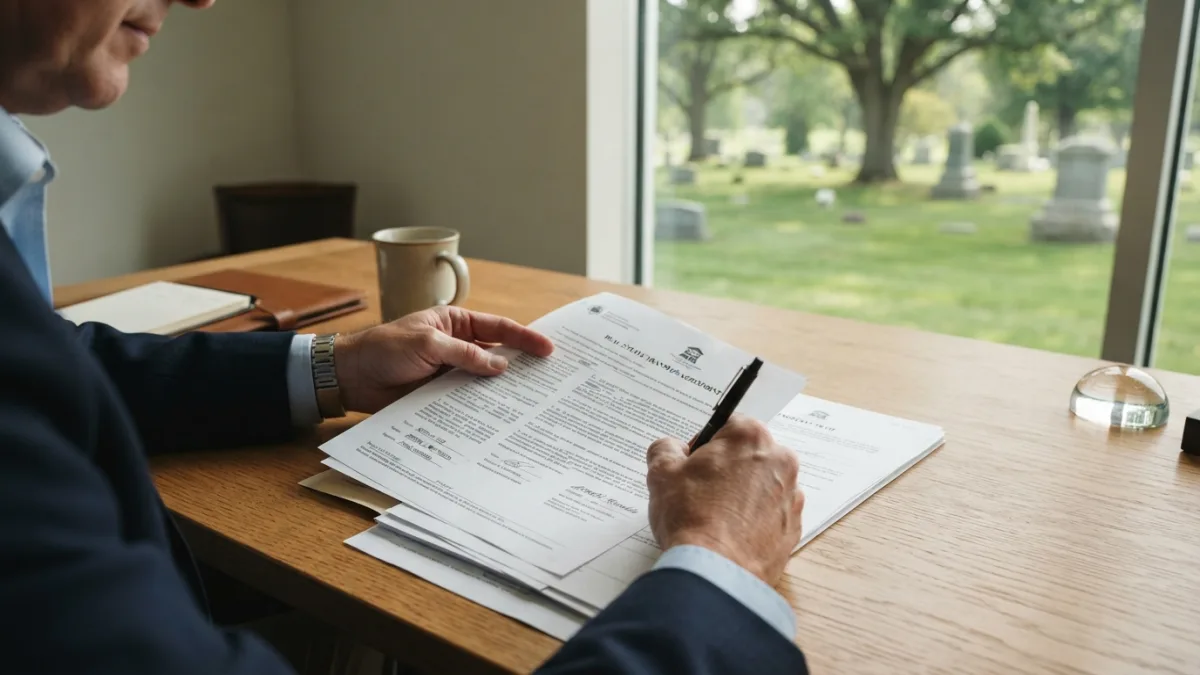
Start with the deed, certificate of interment rights, purchase agreement, or other ownership record you have. The office may require a different document or a replacement record, so follow its instructions rather than assuming your paperwork is sufficient.
Proof of ownership and a completed transfer are not the same thing. Gather both kinds before you treat the sale as done:
- Deed, certificate of interment rights, or purchase agreement - shows you hold the right; get a replacement from the cemetery if you can't find your original.
- Government-issued ID for you and the buyer - most cemeteries require this to process a transfer.
- The cemetery's own transfer form - the document that actually initiates the transfer; only the cemetery office has it.
- Bill of sale between you and the buyer - records the private terms of the sale itself.
- Transfer fee payment record, if a fee applies.
- The cemetery's written transfer confirmation - your proof the sale is actually complete.
See the full paperwork checklist for what to keep private and how to gather each document.
Keep a private copy of the full record. In a public listing, share only the location and details the cemetery says may be disclosed. Do not post identification numbers, signatures, or other sensitive paperwork.
3. Set a price with local context
Ask the cemetery whether it currently sells comparable rights, whether a waitlist exists, and what fees a buyer should expect. That information can help you describe the opportunity, but it is not a required resale price or a guarantee of market value. Set a price you are comfortable accepting and update it if buyer interest is low. See how do you price a cemetery plot for a full pricing checklist.
4. Create an accurate listing
Include the cemetery name, the plot or niche type, the number of spaces, and location details only as permitted by the cemetery. State that the transfer is subject to the cemetery's process, and identify who is expected to pay any confirmed transfer fee. Never promise a completion date the cemetery has not given you.
5. Complete the sale through the cemetery's process
Once you have a buyer, have both parties follow the cemetery's written instructions. Confirm with the office what marks the transfer as complete, and keep copies of the final paperwork and payment records. Do not represent the burial right as transferred until the cemetery confirms that its requirements have been met.
For more context on one possible cost, read What is a cemetery transfer fee?. That article is general information, not a substitute for the fee and transfer requirements of your cemetery. If you're not yet sure whether your specific situation allows a resale at all, start with can you sell a cemetery plot? Wondering how long the whole process will take? See how long does a cemetery plot transfer take?